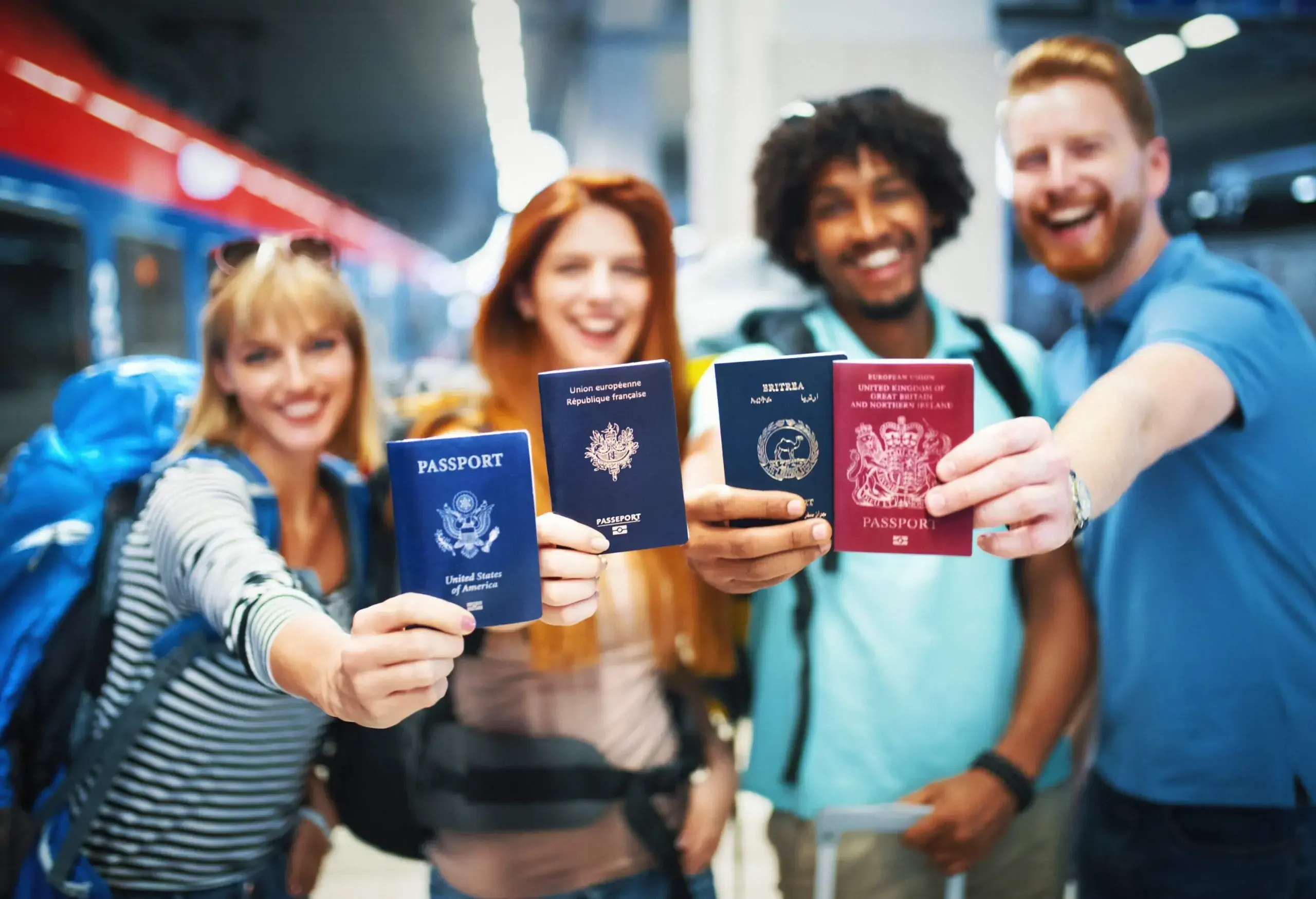

A passport book is the ultimate key to international travel, but did you know it’s not the only form of ID that will let you travel abroad? The U.S. also issues a passport card, which can be used at land border crossings with Mexico and Canada, plus sea ports-of-entry in Mexico, Canada, the Caribbean and Bermuda. So, how do you know if a passport book or a passport card is better for you? Find out with this helpful guide.
In this post
Passport book: the classic
Passport card: the compact
Passport card vs book: the main differences
Do you need both the passport book and card?
How to apply for a passport card
Does a passport card qualify as a Real ID?
FAQ
Passport book: the classic
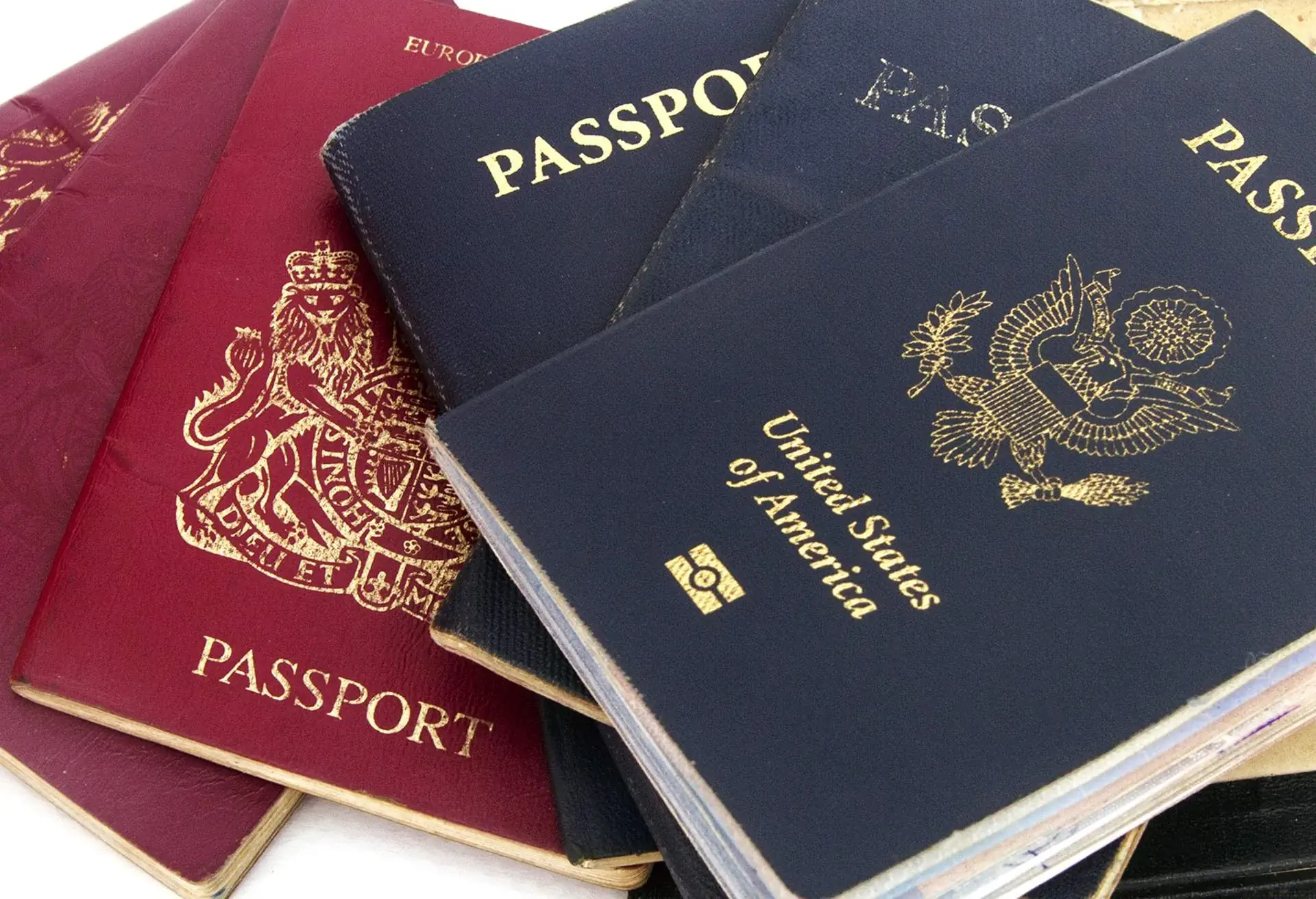
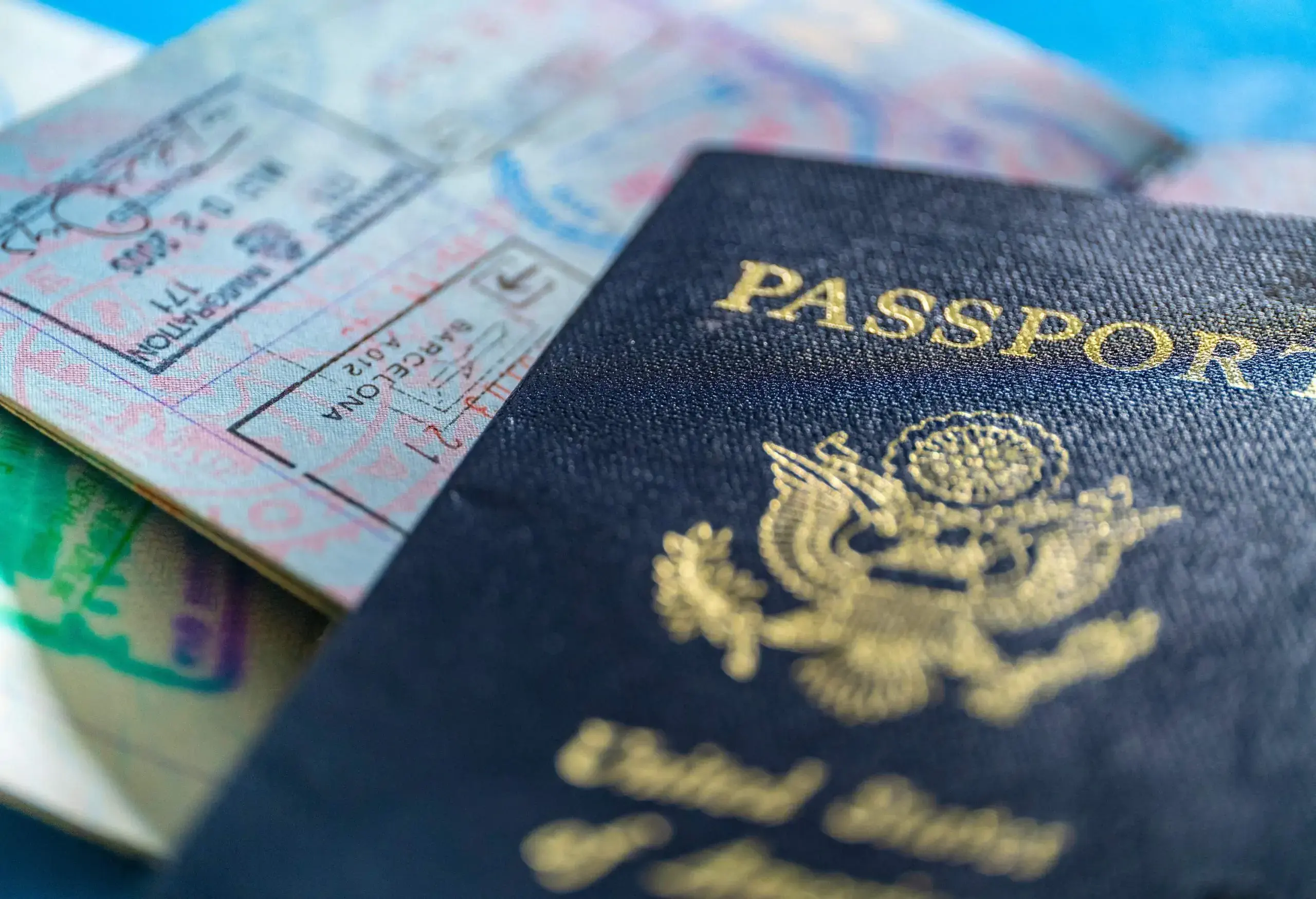
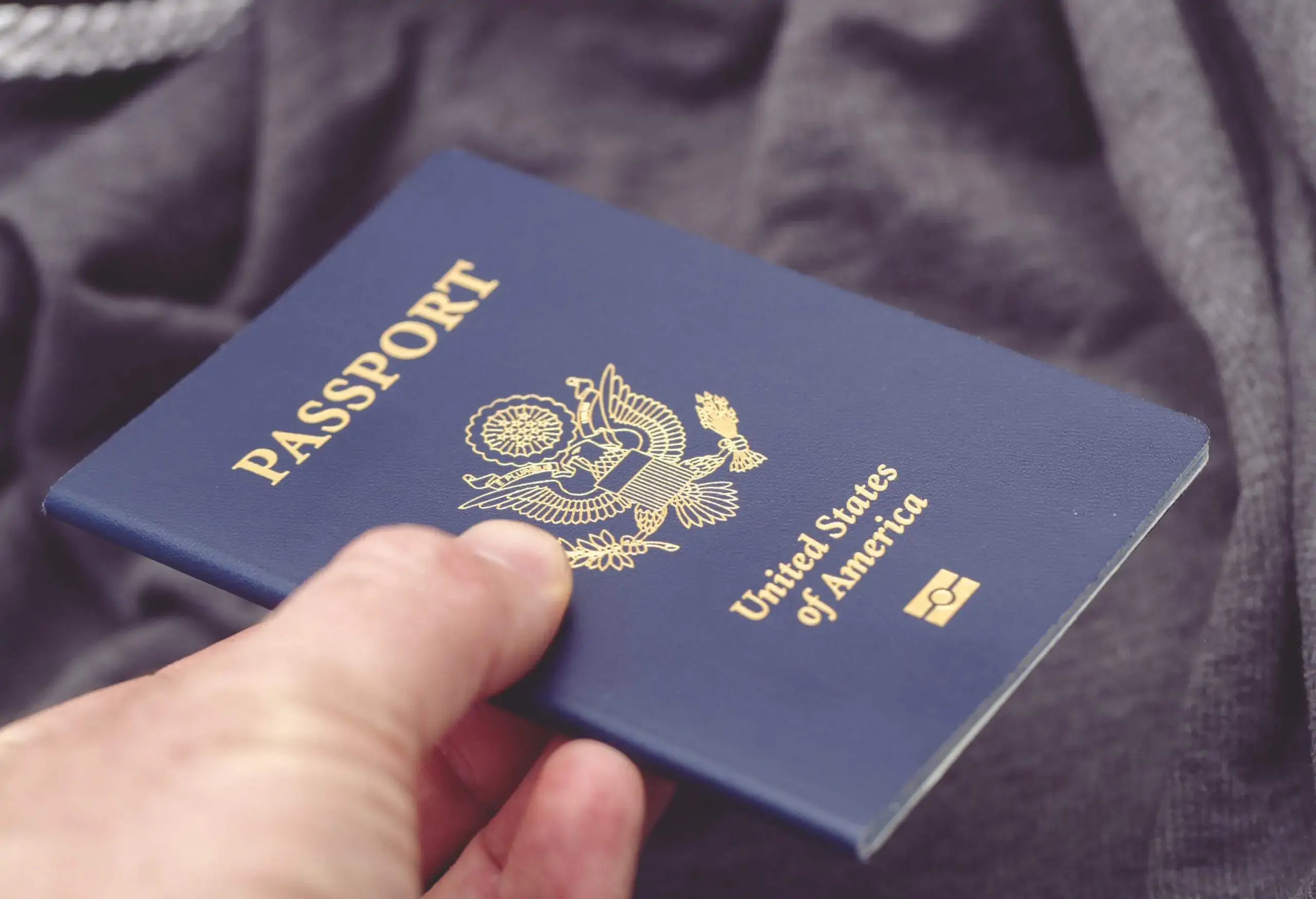
A passport book is the classic 28-page navy blue book that includes an ID page followed by blank pages for entry and exit visas. Passports for international travel have been issued by the U.S. Department of State since 1789, though the document has undergone many changes since then. The blue book was first issued in 1976 for the bicentennial; before that, the book was green or sometimes red. Passport books are valid for international travel by air, land, and sea, though sometimes you need additional visas depending on the destination.
Passport card: the compact
A passport card is similar to a driver’s license in shape and size. It was introduced by the U.S. Department of State in 2008 to provide a cheaper alternative to the passport book for Americans traveling to Mexico, Canada, the Caribbean, and Bermuda by land or sea. It’s valid for land and sea travel to these destinations only, making it a less powerful document than a passport book, but it’s a useful option for certain types of travelers nonetheless.
Passport card vs book: the main differences
While both passport cards and books can be used for international travel, there are many differences between the two documents, not least of which is how and where you can use them.
Do you need both the passport book and card?
No, you do not need both the passport book and card. A passport book provides more access than a passport card, so it’s the better document to have for most travelers. That said, if you do not have plans to travel internationally by air, and instead you only plan to travel to Mexico, Canada, the Caribbean or Bermuda by land or sea, the passport card is a much cheaper option and might be a great fit for you.
In a nutshell, the passport card is primarily designed for Americans who live in border communities near Mexico or Canada and cross the border regularly, or seafarers who travel to some Caribbean countries and Bermuda.

How to apply for a passport card
Applying for a passport card is the same process as applying for a passport book.
If you’re a first-time applicant, you must fill out form DS-11, provide primary evidence of U.S. citizenship (such as a certified birth certificate or naturalization certificate), provide an accepted photo ID and photocopy, and provide a passport photo, then submit all your documentation in-person at an authorized passport acceptance facility (such as post offices, libraries, or county clerks).
If you’re eligible to renew by mail using Form DS-82, you can apply for a passport card as a renewal even if it would be your first card. You can also request both the book and card when renewing, though you’ll need to submit both documents when renewing by mail.
Does a passport card qualify as a Real ID?
Yes, both U.S. passport books and passport cards are Real ID-compliant and accepted by TSA as valid identification for domestic flights. That means you’ll be able to use them to fly domestically within the U.S., but remember that passport cards cannot be used for international air travel. For that, you’ll need a passport book.
Conclusion
Passport cards are beneficial for land and sea travelers to Mexico, Canada, some Caribbean countries and Bermuda, but all other international travel requires a passport book instead. For most travelers, the passport book offers the flexibility and access you need for any trip, but if you’re a frequent border-crosser or cruise to nearby destinations, the passport card’s lower cost and compact size might make it worth adding to your wallet.
Frequent questions about the difference between passport card and book
Yes. First-time applicants can request both the passport book and the passport card on the same DS-11 application and submit them together in person, which saves one $35 acceptance fee. If renewing, you can also renew both at the same time following the State Department renewal instructions.
Yes. U.S. passport cards include RFID technology and are accepted in Ready Lanes, which are designed to speed processing at some U.S.-Mexico land ports of entry. Use Ready Lanes where posted to save time when returning by land from Mexico.
A passport book is a federal travel document for international travel by air, land, or sea. A passport card is a wallet-size travel document for land and sea travel to Canada, Mexico, the Caribbean, and Bermuda (also Real ID-compliant). A Real ID is a state-issued driver’s license or ID that meets federal standards for domestic air travel; a passport can be used instead.
A passport is a government-issued travel document proving identity and citizenship. A visa is permission issued by a destination country that authorizes entry and is usually placed in the passport book. Visas are destination-specific and may be required depending on your nationality, purpose of travel, and length of stay.
Passport book is better for most travelers because it’s valid for travel anywhere by air, land, or sea. Consider a passport card only if you travel frequently by land or sea to Canada, Mexico, the Caribbean, or Bermuda and want a cheaper, wallet-sized option.
Passport cards are accepted for land and sea travel to and from Canada, Mexico, the Caribbean, and Bermuda. They are not valid for international air travel. Passport cards are also accepted in Ready Lanes at some U.S.-Mexico border crossings.
The foregoing article was last updated in December 2025. It does not contain legal advice and is for informational purposes only. KAYAK does not guarantee, and accepts no legal liability arising from or connected to, the accuracy, reliability, currency, or completeness of any of the information contained in this article and/or any of the content linked to within it. Always check the official government website of your departure and arrival destinations prior to travel for up-to-date information.
Sources:
https://travel.state.gov/content/travel/en/passports/need-passport/card.html
https://travel.state.gov/content/dam/passports/forms-fees/Passport%20Book%20vs%20Card%20_ENG_2022.pdf
https://www.archives.gov/research/passport
https://www.nbcnews.com/storyline/brexit-referendum/britain-s-blue-passport-storm-highlights-generational-divide-brexit-n832136
https://travel.state.gov/content/travel/en/passports/need-passport/apply-in-person.html